
Homemade Aged Eggnog
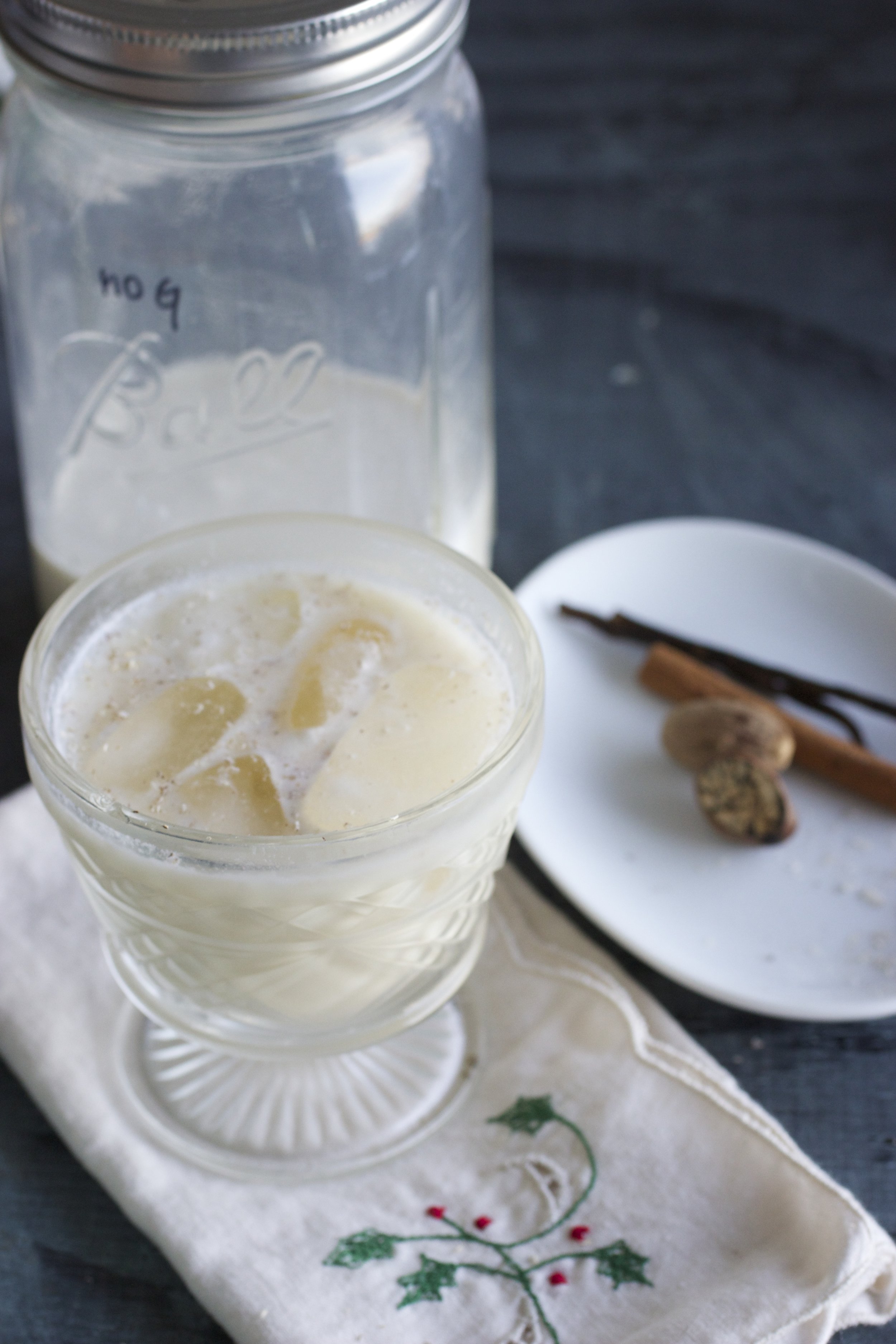
Aged eggnog is a classic holiday drink made by mixing eggs, sugar, cream, and a blend of spirits—then letting the mixture mature for days or even weeks. As it rests, the flavors mellow, the alcohol smooths out, and the drink becomes safer and more balanced. More nuanced than just-made ‘nog, aging mellows the boozy nose of this super spiked beverage and makes for a harmonious, blended flavor.
Here’s how to make homemade aged eggnog and why it tastes better than the fresh version.
Why Make Aged Eggnog?
Eggnog is made with eggs, sugar, a blend of spirits and milk or cream (or both). In a typical iteration, eggs are blended with sugar and booze creating a thick and sweet beverage, not unlike Baileys. From there, portions of milk and cream are added before serving. Some recipes call for whipped cream, while others fold in whipped egg whites. I took another route entirely and went for an aged eggnog recipe.
Is Aged Eggnog Safe?
Alcohol is a natural preservative, killing off bacteria. I had heard of aged eggnog before—the process seemed so much easier than the last minute preparation required with other recipes. With aged eggnog, eggs and spirits (like rum, brandy, cognac, whisky, or bourbon) are blended and mixed with sugar, the alcohol killing any potential of bacteria from the raw eggs over the course of time. (In fact, some think aged eggnog is safer to drink.)
What Does Aged Eggnog Taste Like?
The real benefit to aging the eggnog, however, can be tasted with each sip. More nuanced then just-made ‘nog, aging mellows the boozy nose of this super spiked beverage and makes for a harmonious, blended flavor. Smoother-tasting than fresh eggnog, aging the drink also turns the consistency thin, a nice break from the thick and cloying versions we’ve all come to expect from the store.
How to Serve Aged Eggnog
To serve, you can of course fold in whipped cream, if you’re a frothy eggnog lover; just as you can use reduced fat milk if you prefer a lighter version. I add toasted star anise to the jar a few days before I plan to serve it—the warming spices embody all that is symbolic of the holidays in one.
Aged Vanilla Eggnog (Recipe)
Makes 8 lowball glasses | start to finish: 20 to 30 minutes
1 1/2 cups bourbon or whiskey
1/2 cup dark rum
1/2cup brandy
12 eggs
1 1/2 cup sugar
1 vanilla bean pod
2 star anise, dry roasted (optional)
Combine all of the spirits and set aside. In a large bowl or standing mixer, add the eggs and sugar. Beat on low speed until all of the sugar has dissolved, about 3 to 5 minutes. Turn the mixer to the lowest setting and slowly add the spirits, drop by drop at first to temper the eggs. When all of the liquid has been added, strain into a clean glass jar (using a strainer will catch any solid bits of egg), cover and store in a cool dark place. Invert the jar occasionally, or at least every three days, for at minimum of nine days and up to three weeks total. Five days before serving, add the vanilla bean pod and star anise, if using.
To serve:
1 1/4 cup whole milk
1/4 cup heavy cream
Ice Whole nutmeg, for grating
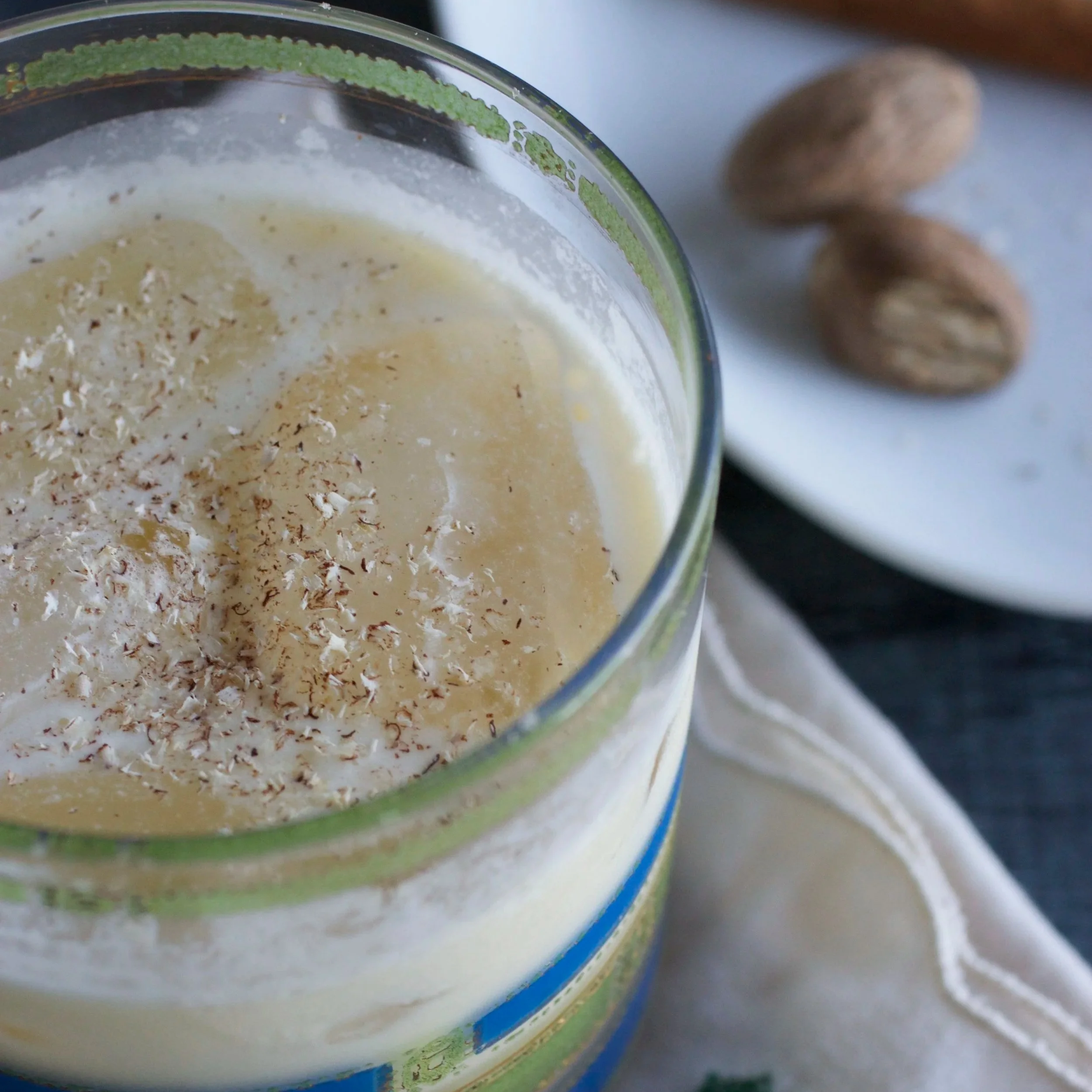
Strain out the spices and place the eggnog mixture into a large bowl or container. Add the milk and heavy cream and stir to combine. To serve, shake a ladle-full (about ½ cup) of eggnog with ice until frothy. Serve immediately, over a lowball filled with ice and top with some freshly grated nutmeg.
🥃 Tip: Aged eggnog tastes best after at least 10 to 14 days — the alcohol mellows and the flavors blend into a silky, balanced drink.
⭐ Flavor variation: Swap bourbon for cognac or add a cinnamon stick or extra star anise during the final days of aging.
🕒 Make ahead: Properly sealed, aged eggnog keeps for at least 3 weeks thanks to the high alcohol content.
AGed Eggnog FAQ:
Common Questions About Aged Eggnog
Is aged eggnog safe to drink?
Yes — aged eggnog is generally considered safer than freshly made eggnog. The high-proof alcohol acts as a preservative and gradually neutralizes potential bacteria in the raw eggs. Food scientists at Clemson University tested this and found that pathogens declined to undetectable levels after several days of aging. As long as you use real spirits (40% ABV or higher) and follow clean storage practices, aged eggnog is safe for most adults to enjoy.
How long can you age eggnog?
You can age eggnog for a minimum of 7–10 days and up to several weeks. Many classic recipes age for three to six weeks, and some traditionalists age batches for months (or even a year!).
As it ages, the alcohol mellowing increases, the spice notes deepen, and the flavor becomes smoother and more integrated.
What’s the best alcohol for aged eggnog?
A blend of spirits works best. Bourbon or whiskey provides warmth, dark rum adds molasses-like depth, and brandy or cognac lends a silky finish. You want a combined alcohol percentage high enough to preserve the mixture — aim for a final blend that’s at least 20–25% ABV before you add milk or cream.
Does aged eggnog thicken or thin over time?
Aged eggnog actually thins out as it rests. While fresh eggnog can be thick and heavy, the alcohol slowly breaks down the proteins in the eggs, creating a smoother, more pourable texture. Once you add milk or cream at serving time, it becomes lightly creamy again — but never as dense as store-bought versions.
Can you make aged eggnog without dairy?
Yes — you can age eggnog without dairy, as long as the eggs + sugar + alcohol mixture is present. Simply omit the milk and cream during the aging period. Add dairy-free alternatives (like coconut milk or almond milk) right before serving.
Just note: dairy-free versions will taste lighter and won’t have the same silky mouthfeel as classic eggnog.
🍐 More holiday kitchen projects: If you like make-ahead recipes like aged eggnog, try my Quince Syrup and Membrillo — a fragrant seasonal preserve.
🍸 Or explore: Preserving Fruit in Alcohol — a simple, timeless way to capture fruit flavor for winter cocktails and desserts.
Last updated .